Poshan Pakhwada 2026: The Complete Guide (Theme, Dates & More)
TL;DR: Poshan Pakhwada is India’s twice-a-year, 15-day nutrition awareness campaign run by the Ministry of Women and Child Development, and the 8th edition (2026) ran from April 9–23 with the theme “Maximizing Brain Development in the First Six Years of Life.”
Okay, let’s be honest — the word “Pakhwada” alone can make anyone’s eyes glaze over. It sounds official, dry, even a little intimidating. But stick with us, because Poshan Pakhwada is actually one of India’s most quietly ambitious ideas: get an entire country talking about food, mothers, and babies at the same time, twice a year, every year.
We’ve dug through government press releases and news coverage to build the one-stop page you were looking for — no jargon, just plain answers.
Poshan Pakhwada at a Glance
Think of this as the “ID card” of the campaign — everything you need in one quick scan.
| Quick Fact | Details |
|---|---|
| Full meaning | Poshan = Nutrition, Pakhwada = Fortnight (15 days) |
| Type | National nutrition awareness campaign |
| Organised by | Ministry of Women and Child Development (MWCD), Government of India |
| Parent scheme | Poshan Abhiyaan (launched 8 March 2018) |
| Umbrella mission | Mission Poshan 2.0 |
| First edition | March 2019 |
| Latest edition | 8th Poshan Pakhwada, 9–23 April 2026 |
| 2026 theme | “Maximizing Brain Development in the First Six Years of Life” |
| Frequency | Twice a year, in spirit — Poshan Pakhwada (March/April) and Poshan Maah (September) |
| Who it targets | Pregnant women, lactating mothers, adolescent girls, children under 6 |
| Ground-level partner | Anganwadi Centres, Anganwadi workers, ASHA workers |
| Digital backbone | Poshan Tracker app |
What Is Poshan Pakhwada? (Poshan Pakhwada Kya Hai)
If someone asks “what is Poshan Pakhwada” at a dinner table, here’s your one-line answer: it’s a 15-day, nationwide nutrition drive where the government, Anganwadi workers, schools, and everyday families team up to spread the word about healthy eating for mothers and small children.
The name gives it away. “Poshan” is Hindi for nutrition, and “Pakhwada” simply means a fortnight — so it translates to “Nutrition Fortnight.” No hidden meaning, just a literal, very Indian way of naming things.
It sits under a bigger umbrella called Poshan Abhiyaan (the National Nutrition Mission), launched on 8 March 2018 to fight malnutrition, stunting, and anaemia using data, technology, and people power.
Poshan Pakhwada Is Organised by Which Ministry?
Poshan Pakhwada is organised by the Ministry of Women and Child Development (MWCD), the nodal (lead) ministry nationally. At the state and UT level, the local Department of Women and Child Development or Social Welfare Department runs the show on the ground. So whether someone asks “Poshan Pakhwada under which ministry” or “which ministry,” the answer is the same: MWCD.
Meet the Family: Poshan Abhiyaan, Poshan Maah, and Poshan Pakhwada
Here’s where people usually get confused, so let’s clear it up with a simple comparison. Poshan Abhiyaan is the parent mission. Poshan Pakhwada and Poshan Maah are its two big yearly “family events.”
| Feature | Poshan Pakhwada | Rashtriya Poshan Maah |
|---|---|---|
| Duration | 15 days | 30 days (the whole month) |
| Timing | March/April | September |
| Meaning | Nutrition Fortnight | National Nutrition Month |
| Vibe | Focused, punchy, theme-driven | Longer, broader community push |
| Parent scheme | Poshan Abhiyaan / Mission Poshan 2.0 | Poshan Abhiyaan / Mission Poshan 2.0 |
| Run by | Ministry of Women and Child Development | Ministry of Women and Child Development |
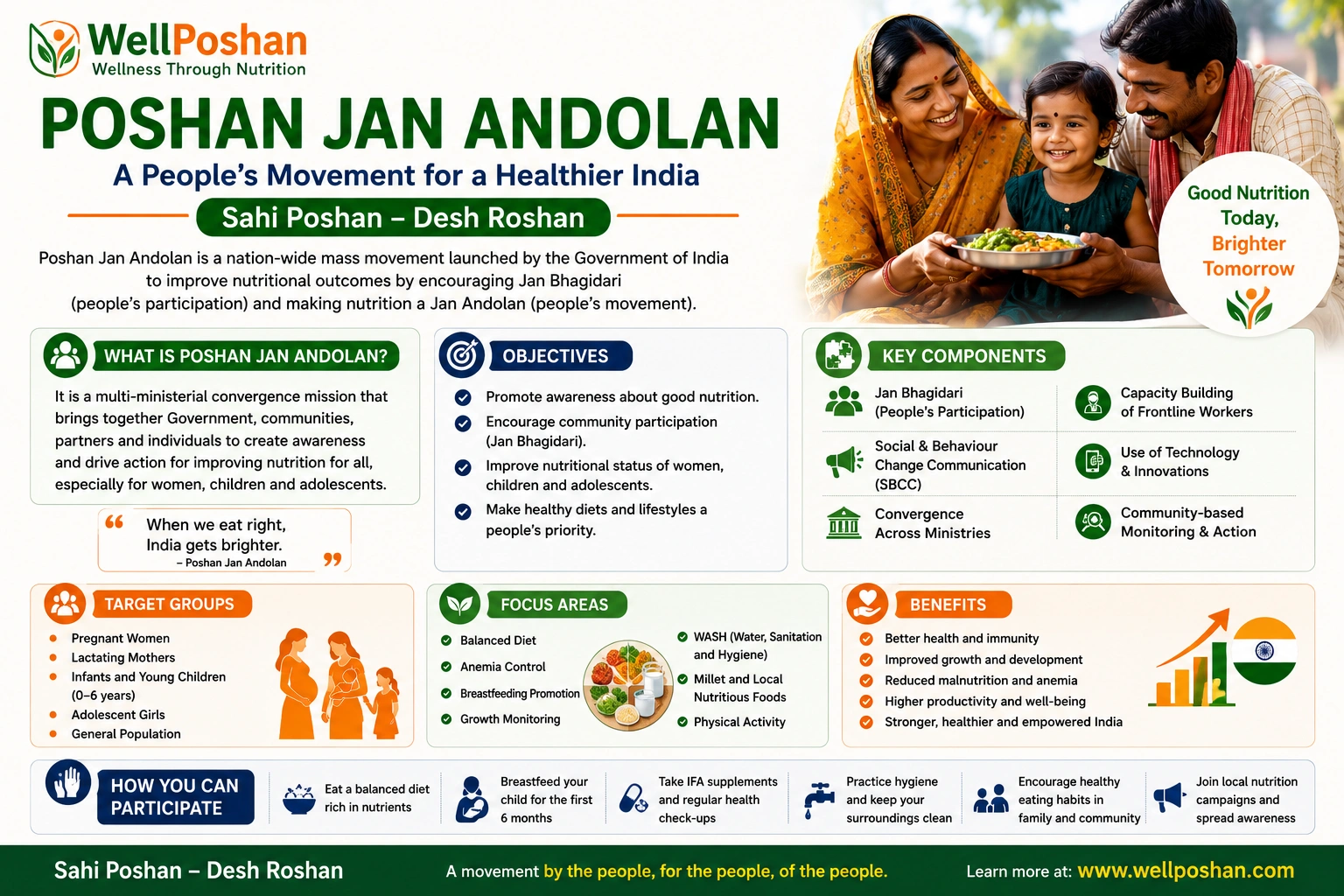
Together, these two campaigns form what officials now call a Jan Andolan — literally, a “people’s movement.” Nutrition isn’t just the government’s job here; it’s everyone’s job, from Anganwadi workers going door-to-door, to school kids drawing posters, to families eating a little healthier at home.
The Journey So Far: Poshan Pakhwada Through the Years
Poshan Pakhwada has quietly built up quite a track record. Here’s how the theme has evolved — and yes, you can genuinely see India’s nutrition priorities shifting year by year.
| Edition | Year & Dates | Theme |
|---|---|---|
| 1st | March 2019 | Promoting a healthy and nutritious diet among children and women |
| 2nd | 2020 | Increasing male engagement in Poshan Abhiyaan to improve nutritional outcomes |
| 3rd | 2021 | Addressing nutritional challenges through Food Forestry |
| 4th | 21 March–4 April 2022 | Integration of Modern and Traditional Practices (Poshan MITRA) |
| 5th | 2023 | Nutrition for All: Together Towards a Healthy India |
| 6th | 2024 | Poshan Bhi Padhai Bhi (Nutrition Also, Education Also) |
| 7th | 8–22 April 2025 | First 1000 Days of Life; Poshan Tracker; CMAM; Healthy Lifestyle vs. Obesity |
| 8th | 9–23 April 2026 | Maximizing Brain Development in the First Six Years of Life |
Notice the pattern? Early editions covered basics — “eat healthy,” “get dads involved,” “grow your own food.” Later ones got more scientific — tracking apps, malnutrition management, and now brain development. A campaign maturing in real time.
What Is the Theme of Poshan Pakhwada 2025?
Poshan Pakhwada 2025 was the 7th edition, running from 8 to 22 April 2025. Instead of one theme, the Ministry rolled out four connected focus areas:
Union Minister Smt. Annpurna Devi visited Arunachal Pradesh to review nutrition efforts on the ground, while officials across all States and UTs joined a national webcast to kick things off.
Poshan Pakhwada 2026: What’s New?
Now for the big one everyone’s typing into Google: what is Poshan Pakhwada 2026?
The 8th Poshan Pakhwada ran from 9 to 23 April 2026, launched at Vigyan Bhawan, New Delhi, by Union Minister Smt. Annpurna Devi, alongside Minister of State Smt. Savitri Thakur and WCD Secretary Shri Anil Malik. This time the Ministry picked one laser-focused theme:
Why brain development? Per the Ministry’s briefing, over 85% of a child’s brain development happens before age six — and the first 1,000 days sit at the heart of that window. The 2026 campaign leaned into four focus areas: maternal and child nutrition, early stimulation for babies (0–3 years), play-based learning for toddlers (3–6 years), and — refreshingly modern — cutting down screen time.
Officials also shared striking numbers: since Poshan Abhiyaan began in 2018, the movement has clocked over 150 crore sensitisation activities and more than 9.8 crore community-based events nationwide. 📌 Figures per MWCD’s 2026 launch briefing — double-check on pib.gov.in for research use, as cumulative totals update each edition.
Which State Hosted the Poshan Pakhwada?
A common mix-up, so let’s clear it up: Poshan Pakhwada isn’t “hosted” by one state the way a summit might be. It’s a nationwide campaign running simultaneously across every state and union territory. The national launch event, though, happens at one venue each year — Vigyan Bhawan, New Delhi, in 2026. States then run their own local activities in parallel, often with a minister visiting a specific Anganwadi Centre as a symbolic kickoff.
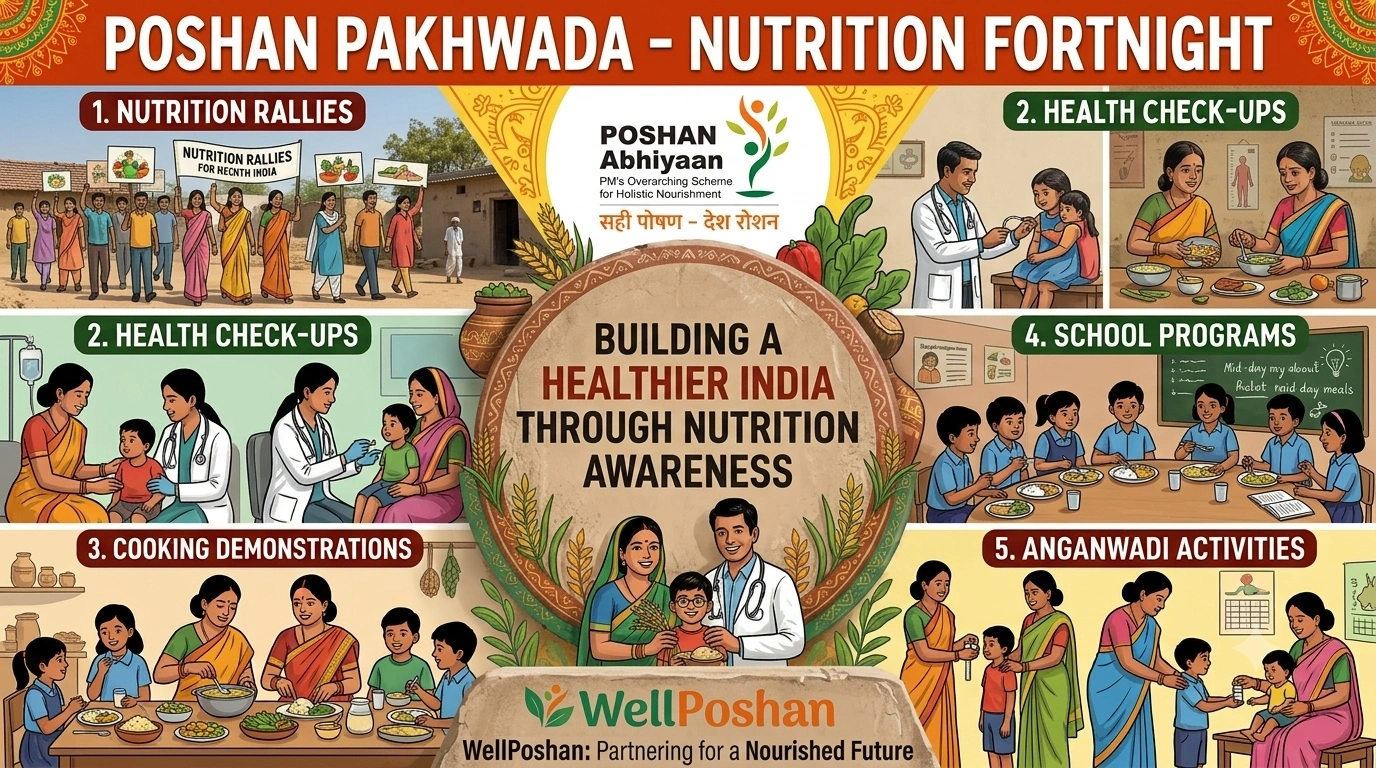
What Actually Happens During Poshan Pakhwada? (The Jan Andolan in Action)
This is the fun part. Poshan Pakhwada isn’t fifteen days of speeches — it’s genuinely hands-on:
The Poshan Pakhwada App and Data Entry: How the Tech Side Works
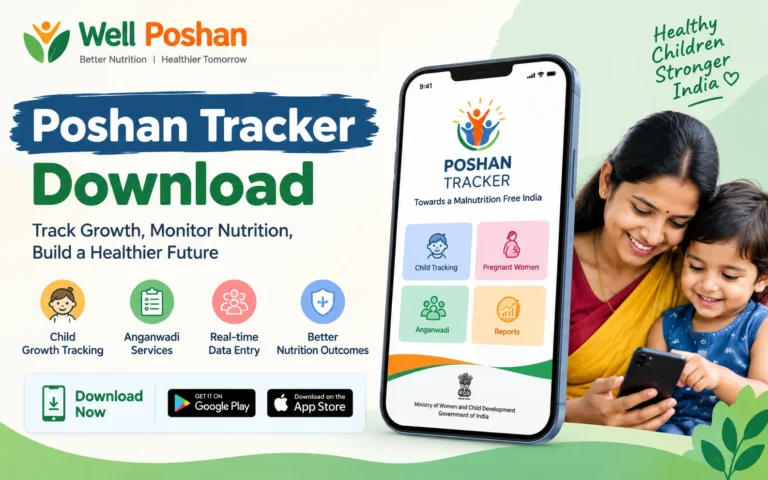
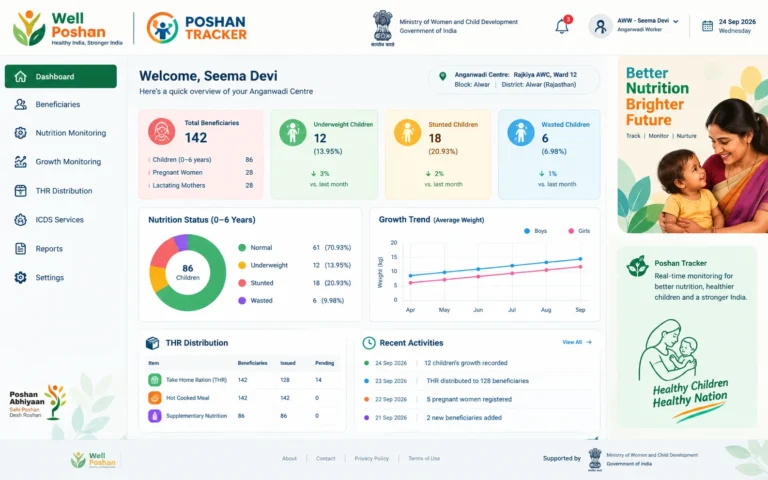
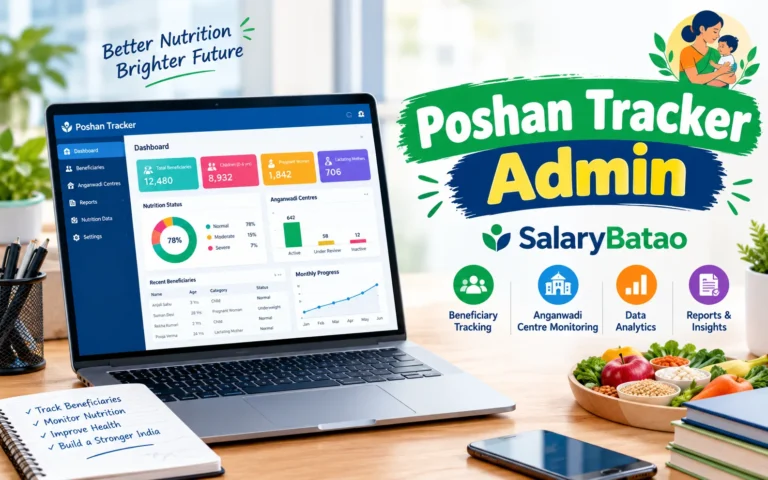
A lot of people search for a “Poshan Pakhwada app,” but here’s a small clarification: the actual application is called the Poshan Tracker, launched in March 2021. It’s the digital engine behind Poshan Pakhwada, Poshan Maah, and all of Poshan Abhiyaan.
In plain terms, here’s what it does:
- Anganwadi workers use it to record a child’s height, weight, and growth in real time — no more paper registers.
- It flags malnourished or at-risk children early, so help can reach them faster.
- It has a beneficiary/citizen-facing module too, which the Ministry actively promoted during Poshan Pakhwada 2025, so families can check their own records.
- As of the Ministry’s 2025 update, more than 9 crore beneficiaries were already registered across over 14 lakh Anganwadi Centres. 📌 Verify current totals on the official Poshan Tracker portal, since registrations grow continuously.
So next time someone mentions “Poshan Pakhwada data entry,” know that they’re almost certainly talking about Anganwadi workers logging information into this very app.
Our Editorial Take: A Theme Impact Read
This is our own analytical read of the campaign’s evolution — not an official government ranking — based on how well each theme matched India’s pressing nutrition challenges at the time.
| Edition | Theme Focus | Relevance to India’s Nutrition Priorities (Editorial Rating) |
|---|---|---|
| 2019–2021 | Awareness basics, male involvement, food forestry | Foundational — necessary groundwork |
| 2022–2023 | Modern + traditional integration, inclusive access | Strong — widened who the campaign reached |
| 2024 | Poshan Bhi Padhai Bhi | Notable — linked nutrition directly to early education |
| 2025 | First 1,000 days, tech adoption, CMAM, obesity | High — tackled both under- and over-nutrition |
| 2026 | Brain development in first 6 years | Highest so far — grounded in hard neuroscience data |
The shift from “eat well” to “brain development” messaging is the smartest pivot yet — it moves the conversation from a vague health goal to something every parent instinctively cares about: their child’s potential.
Achievements and Impact: Does Poshan Pakhwada Actually Work?
Fair question. Here’s what’s been publicly reported:
Interesting Facts About Poshan Pakhwada
- It’s essentially the “sibling campaign” of Poshan Maah — one runs in spring, the other in autumn.
- The word “Pakhwada” is used for plenty of other Indian government campaigns too (like Swachhata Pakhwada), so it’s a familiar naming pattern.
- Poshan Pakhwada 2022’s focus on “Poshan MITRA” bundled in water conservation and rainwater harvesting — proof the campaign occasionally strays into surprisingly unrelated but useful territory.
- The Ministry of AYUSH regularly joins in, running anaemia camps and awareness sessions rooted in traditional wellness practices alongside modern nutrition science.
- Screen-time reduction became an official focus area only in 2026 — a sign of how “nutrition” campaigns are expanding to cover overall child development, not just food.
Mini Glossary: Key Terms Explained Simply
The National Nutrition Mission, the parent scheme launched in 2018.
The updated, integrated nutrition strategy that now houses both Poshan Pakhwada and Poshan Maah.
A village-level childcare and nutrition centre, the backbone of ground-level delivery.
The official app used for growth monitoring and data entry.
Community-based Management of Acute Malnutrition; treating severely malnourished children close to home.
Literally “people’s movement”; the government’s term for turning nutrition into a mass, participatory effort rather than a top-down scheme.
Conclusion: Key Takeaways
Poshan Pakhwada is, at its heart, a simple idea executed at a massive scale: get an entire nation to pause, twice a year, and think seriously about how mothers and small children are eating and growing. It’s run by the Ministry of Women and Child Development, sits under the bigger Poshan Abhiyaan umbrella, and has evolved from basic diet messaging in 2019 to a brain-science-driven theme in 2026.
Along the way, it’s picked up a digital backbone (the Poshan Tracker app), a colourful ground-level culture (think rangoli and posters), and a new identity as a genuine Jan Andolan. Whether you’re a student researching it, an Anganwadi worker living it, or just someone who searched “Poshan Pakhwada kya hai” out of curiosity — now you know the full picture.
How does Poshan Tracker compare to other government health-tracking apps? What does India’s NFHS data actually say about stunting trends since 2018? How do state governments customise Poshan Pakhwada activities locally?
Frequently Asked Questions (FAQs)
1. What is Poshan Pakhwada?
It’s a 15-day nationwide nutrition awareness campaign run by India’s Ministry of Women and Child Development, held to promote better health and nutrition for mothers, children, and adolescent girls.
2. Poshan Pakhwada is organised by which ministry?
The Ministry of Women and Child Development (MWCD), Government of India, with state Women and Child Development departments coordinating locally.
3. What is the theme of Poshan Pakhwada 2026?
“Maximizing Brain Development in the First Six Years of Life,” observed from 9 to 23 April 2026.
4. What is the theme of Poshan Pakhwada 2025?
Four connected themes: the First 1,000 Days of Life, popularising the Poshan Tracker app, managing malnutrition through CMAM, and tackling childhood obesity, observed from 8 to 22 April 2025.
5. What was the theme of Poshan Pakhwada 2024?
“Poshan Bhi Padhai Bhi” — meaning nutrition and education go hand in hand.
6. Poshan Pakhwada started in which year?
The first edition ran in March 2019, one year after the parent scheme, Poshan Abhiyaan, launched on 8 March 2018.
7. Poshan Pakhwada is celebrated in which month?
Usually in March or April each year, for 15 days. Its sister campaign, Rashtriya Poshan Maah, runs every September for a full month.
8. What is the meaning of Poshan Pakhwada?
“Poshan” means nutrition, and “Pakhwada” means a fortnight (15 days) — so it translates literally to “Nutrition Fortnight.”
9. Which state hosted the Poshan Pakhwada?
No single state “hosts” it — it’s a simultaneous nationwide campaign. Only the national launch ceremony happens at one venue each year (Vigyan Bhawan, New Delhi, in 2026).
A Quick Disclaimer
This article is an independent, informational explainer written for general awareness and SEO purposes. It is not an official publication of the Ministry of Women and Child Development or any Government of India body, and it is not medical or nutrition advice for individual health decisions. Dates, themes, and statistics reflect publicly available government press releases and news coverage at the time of writing and may be revised in future editions — always verify current details on official sources like pib.gov.in, wcd.gov.in, or the Poshan Tracker portal before citing them formally.
Thank You For Reading!
Also read our previous blogs for more such information: