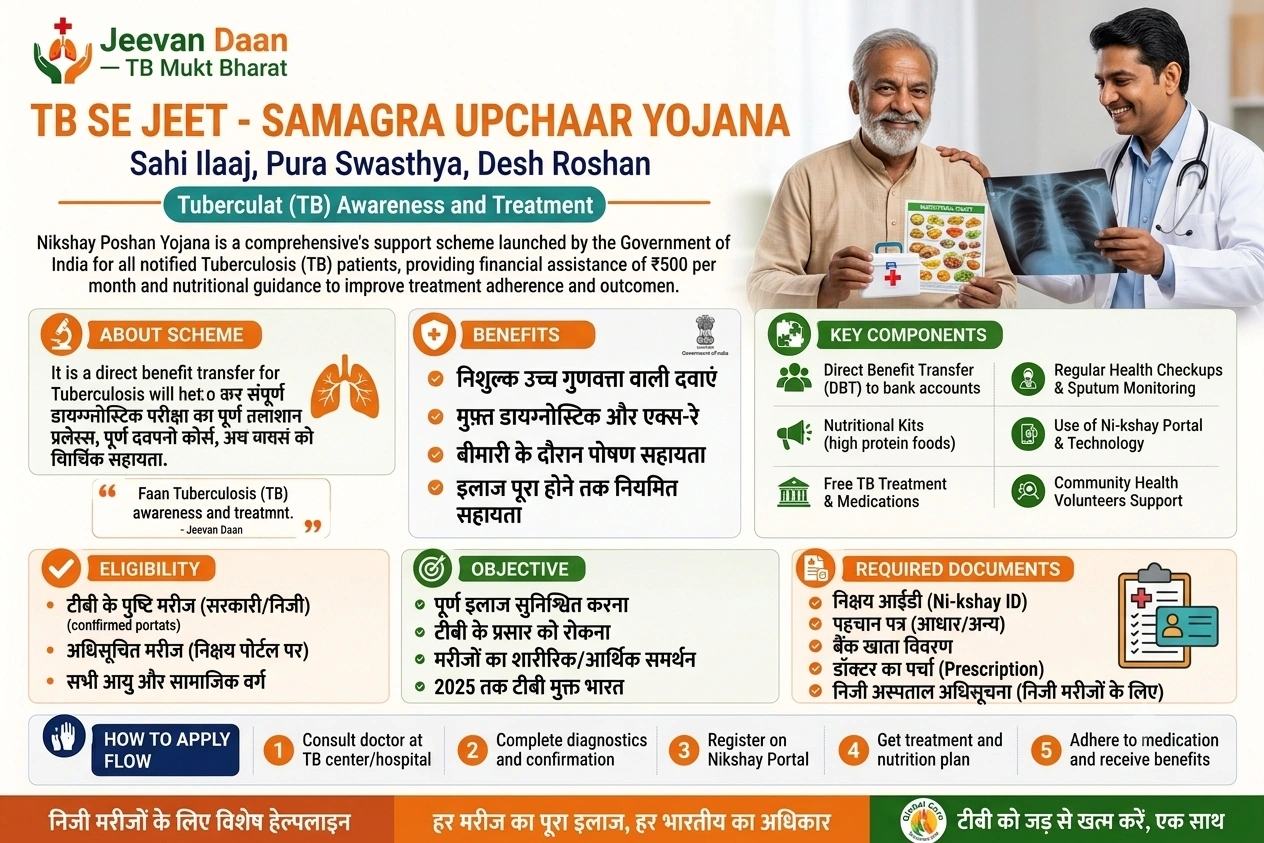
Nikshay Poshan Yojana 2026: ₹1,000 Monthly Nutrition Support for TB Patients
TL;DR: Nikshay Poshan Yojana is a Government of India scheme that pays every registered tuberculosis (TB) patient ₹1,000 a month, straight into their bank account, to help them afford nutritious food while they complete treatment. It’s been running since April 2018, and the payout doubled from ₹500 to ₹1,000 in November 2024.
Tuberculosis doesn’t just attack the lungs — it drains the wallet too. Medicines can be free at government hospitals, but a nutritious diet costs money, and a malnourished body simply doesn’t respond to TB drugs as well as it should. That’s the exact gap Nikshay Poshan Yojana was built to fill. Let’s break down what it actually is, who gets it, and how to claim it — in plain, no-jargon language.
Quick Stats: Nikshay Poshan Yojana at a Glance
What Is Nikshay Poshan Yojana, Really?
Think of it this way: TB treatment is a marathon, not a sprint — it usually runs 6 months or longer. During that time, patients need extra protein and calories to help their bodies fight the infection and cope with the medicines. Many families, especially daily-wage earners, simply can’t stretch their budget for that.
Nikshay Poshan Yojana steps in with a direct cash top-up so patients can buy eggs, milk, pulses, or whatever nutritious food suits them — no ration kit, no middleman, just money in the bank.
It’s a Centrally Sponsored Scheme, meaning the central government funds it and states help implement it through TB units, hospitals, and private practitioners who notify cases on the NIKSHAY digital portal.
How the Scheme Has Evolved
| Milestone | What Happened |
|---|---|
| April 2018 | Scheme launched; ₹500/month announced for all notified TB patients |
| 2018–2019 | Studies flagged slow uptake — roughly half of eligible patients weren’t getting paid on time, and some payments arrived months late |
| September 2022 | “Ni-kshay Mitra” community-support initiative launched under Pradhan Mantri TB Mukt Bharat Abhiyan, encouraging citizens and organisations to “adopt” TB patients and support them beyond the cash benefit |
| November 2024 | Monthly amount doubled to ₹1,000 |
| 2025–2026 | Energy Dense Nutritional Supplementation (EDNS) added for underweight patients (BMI below 18.5), giving extra nutritional support in the first two critical months of treatment |
Who Can Apply? (Eligibility)
| Criteria | Requirement |
|---|---|
| Diagnosis | Confirmed TB patient (any type — pulmonary or extra-pulmonary) |
| Notification date | Notified to the government on or after 1 April 2018 |
| Registration | Must be registered/notified on the NIKSHAY portal by a treating doctor or health facility |
| Bank account | Aadhaar-linked savings account (own account, or a family member’s with written consent, or a Jan Dhan/India Post Payments Bank account if you don’t have one) |
| Treatment sector | Works for patients being treated in both government and private healthcare setups |
How to Register — Step by Step
There’s no separate “apply online” form for patients to fill themselves — registration happens through your treating healthcare provider, which is actually a good thing, since it means one less form to chase while you’re unwell.
Why This Matters: The Bigger Picture
Nutrition and TB recovery are tightly linked — being underweight at diagnosis is one of the strongest predictors of poor treatment outcomes and relapse. That’s exactly why the 2026 update added the EDNS component specifically for underweight patients in the first two months, when the infection is at its most demanding on the body. Pairing medicine with money-for-food is a simple idea, but it directly tackles one of the biggest real-world reasons patients drop out of treatment: they simply can’t afford to keep going.
That said, independent studies from the scheme’s early years found that payments sometimes arrived late — occasionally around five months after treatment began — and not every eligible patient got enrolled. So while the scheme’s design is solid, patients and caregivers should actively follow up with their TB health worker if a payment is delayed rather than assuming it’ll sort itself out.
Conclusion
Nikshay Poshan Yojana puts real money — now ₹1,000 a month — directly into the hands of TB patients so nutrition doesn’t become the reason treatment fails. It’s registered through your healthcare provider, paid via DBT into your Aadhaar-linked account, and now comes with extra nutritional support for underweight patients. If you or someone you know is undergoing TB treatment, the single most useful thing to do is confirm registration on the NIKSHAY portal with your treating doctor and keep bank details updated.
FAQs
1. What is Nikshay Poshan Yojana?
It’s a Government of India scheme that pays TB patients ₹1,000 a month via Direct Benefit Transfer to support their nutrition during treatment.
2. Nikshay Poshan Yojana — how much money do I get?
Currently ₹1,000 per month, up from the original ₹500, following the November 2024 revision. Over a typical treatment course it can add up to roughly ₹3,000–₹6,000 or more depending on duration.
3. When was Nikshay Poshan Yojana started, and who launched it?
It was launched in April 2018 by the Ministry of Health and Family Welfare under the National Tuberculosis Elimination Programme.
4. How do I register for Nikshay Poshan Yojana?
You don’t fill a separate form — your treating doctor or health facility notifies your case on the NIKSHAY portal and submits your Aadhaar-linked bank details for you.
5. How can I check my Nikshay Poshan Yojana payment status?
Your treating health facility or TB unit can check your status on the NIKSHAY portal; patients also get SMS updates when their bank details are validated or need correction.
6. Is Nikshay Poshan Yojana only for government hospital patients?
No — both government and private-sector TB patients are eligible, as long as the case is notified on the NIKSHAY portal.
7. What is EDNS under Nikshay Poshan Yojana?
Energy Dense Nutritional Supplementation is extra nutritional support specifically for underweight TB patients (BMI below 18.5) during the first two months of treatment.
Thank you for reading!
Checkout Well Poshan for more such information.