Poshan Maah 2026: India’s 9th National Nutrition Month Explained
TL;DR: Poshan Maah (Rashtriya Poshan Maah) is India’s National Nutrition Month, observed every September since 2018 as part of the government’s POSHAN Abhiyaan. The 9th edition launched on September 9, 2026, in Varanasi, under the theme “Hamari Anganwadi, Hamari Jimmedari” (Our Anganwadi, Our Responsibility).
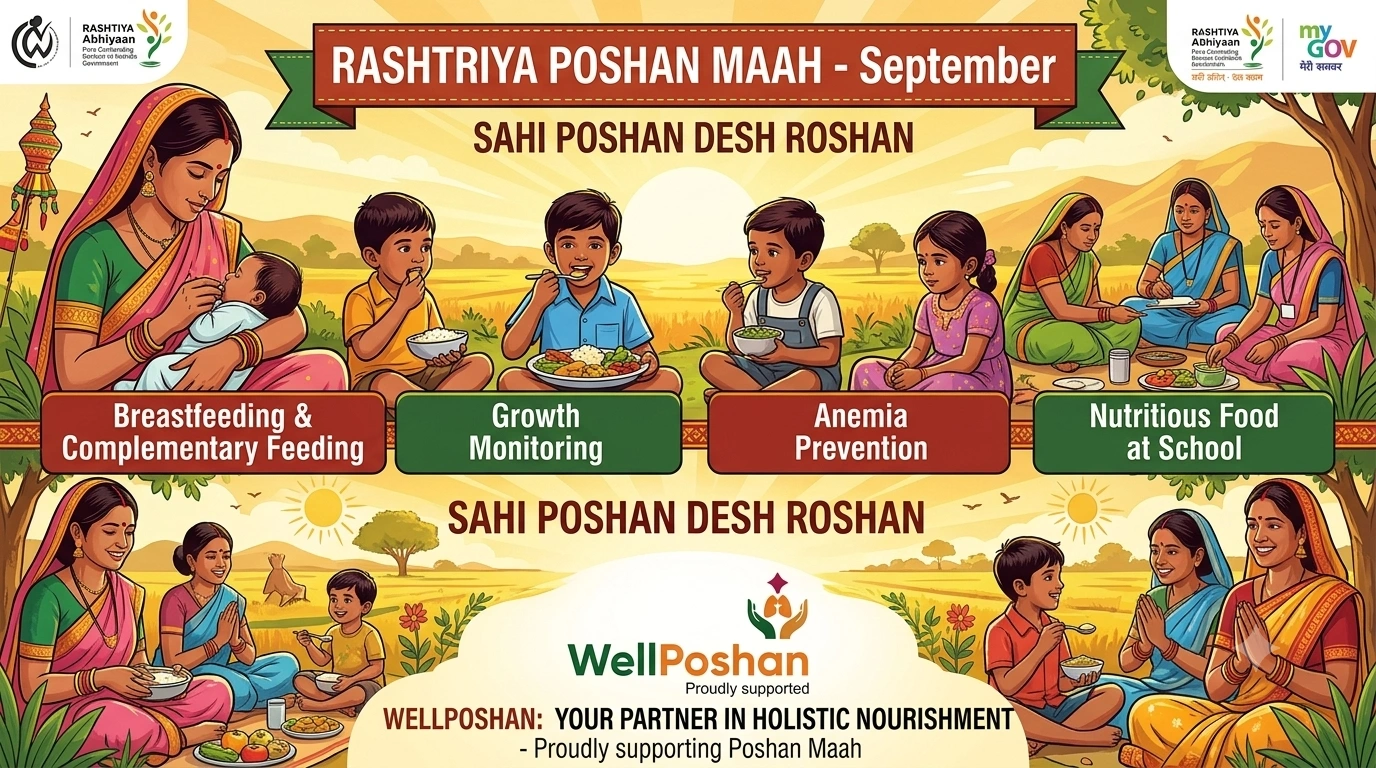
Okay, let’s get straight to it — you searched “what is Poshan Maah,” and here’s your one-line answer: Poshan Maah is a month-long, nationwide nutrition awareness drive that India’s Ministry of Women and Child Development runs every September, turning healthy eating and childcare into a Jan Andolan — literally, a “people’s movement.”
Now let’s unpack that properly.
Quick Facts: Poshan Maah at a Glance
| Field | Detail |
|---|---|
| Full name | Rashtriya Poshan Maah (National Nutrition Month) |
| Started in | 2018, as part of POSHAN Abhiyaan |
| Observed | Every September |
| 2026 edition | 9th |
| 2026 theme | “Hamari Anganwadi, Hamari Jimmedari” |
| 2026 launch date & venue | September 9, 2026 — Rudraksh International Cooperation and Convention Centre, Varanasi, Uttar Pradesh |
| Nodal ministry | Ministry of Women and Child Development (MWCD) |
| Parent scheme | POSHAN Abhiyaan → Mission Poshan 2.0 (Saksham Anganwadi and POSHAN 2.0) |
| Target groups | Pregnant women, lactating mothers, children under 6, adolescent girls |
| Companion event | Poshan Pakhwada (a nutrition fortnight held every March) |
Quick citation-readiness note: Government campaign dates and figures can be updated or clarified as annual editions are confirmed. Always cross-check exact numbers against official Ministry of Women and Child Development or Poshan Tracker information before quoting them elsewhere.
What Is Poshan Maah, Really?
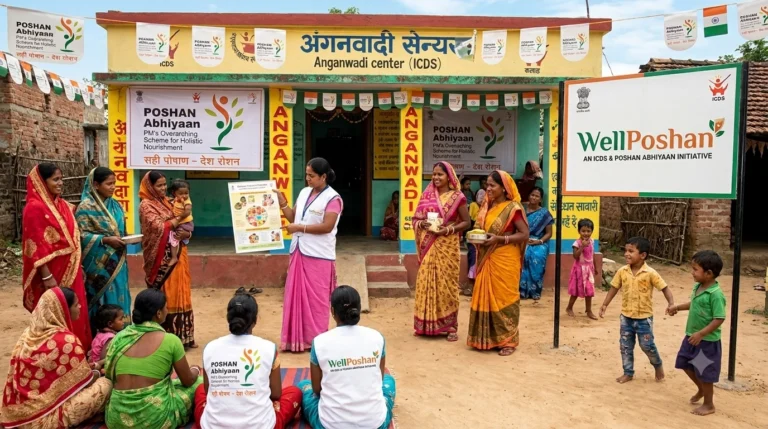
Strip away the acronyms, and Poshan Maah is basically India saying: let’s spend a full month talking about food, health, and children — everywhere, all at once. Anganwadi centres (India’s neighbourhood-level childcare and nutrition hubs), schools, panchayats, hospitals, and even social media accounts all run nutrition-themed activities in parallel.
It isn’t a standalone scheme — it’s the “activation month” for a bigger government mission called POSHAN Abhiyaan. POSHAN stands for Prime Minister’s Overarching Scheme for Holistic Nutrition, and “poshan” is also the Hindi word for nourishment — a neat bilingual double meaning.
Think of POSHAN Abhiyaan as the year-round engine, and Poshan Maah as the month when that engine gets floored.
The Origin Story: How Poshan Maah Came to Be
Poshan Maah doesn’t have a “family” in the traditional biography sense, but it does have a clear origin story worth knowing.
In 2015–16, the National Family Health Survey (NFHS-4) delivered some sobering numbers: roughly 38.4% of Indian children under five were stunted, about 21% were wasted, and over a third were underweight. Those findings pushed the government to act.
On March 8, 2018 — International Women’s Day — Prime Minister Narendra Modi launched POSHAN Abhiyaan, then called the National Nutrition Mission, from Jhunjhunu, Rajasthan, under the Ministry of Women and Child Development.
As part of that mission, the government carved out two recurring campaign windows:
- September became Rashtriya Poshan Maah — the National Nutrition Month.
- March became Poshan Pakhwada — a shorter nutrition fortnight.
So when people ask “who launched Poshan Maah” or “poshan maah started in which year,” the honest answer is: it grew out of POSHAN Abhiyaan, launched in March 2018, with the first September-long Poshan Maah following later that same year.
Poshan Maah 2026: Theme, Dates & What’s New
The 9th Rashtriya Poshan Maah launched on September 9, 2026, at the Rudraksh International Cooperation and Convention Centre in Varanasi, Uttar Pradesh.
Poshan Maah 2026 Theme
“Hamari Anganwadi, Hamari Jimmedari”
Our Anganwadi, Our Responsibility
The framing this year is deliberate: Anganwadi centres are described as the world’s largest childcare network, and the 2026 campaign is built around getting ordinary citizens — not just government workers — to take shared ownership of these centres.
Alongside that, the campaign is pushing awareness of balanced, protein-rich diets for pregnant and lactating women, continuing a running priority across recent editions.
How Poshan Maah Has Evolved Over the Years
Here’s a rough evolution table so you can see the throughline — note that some earlier-edition specifics vary slightly by source, so treat single-year details as worth double-checking against official releases.
| Edition | Year | Notable focus |
|---|---|---|
| 1st | 2018 | Launch year; foundation of the September nutrition-month concept |
| 8th | 2025 | Anaemia prevention, growth monitoring, complementary feeding, and “Poshan Bhi Padhai Bhi”; later government communications framed the theme as “Swasth Nari, Sashakt Parivar” |
| 9th | 2026 | “Hamari Anganwadi, Hamari Jimmedari” — Anganwadi-centred, protein-rich maternal nutrition |
Heads-up: Poshan Maah 2025 dates are reported inconsistently across sources — some list September 12 to October 11, 2025, while official-sounding regional government pages cite a September 17 to October 16, 2025 launch from Dhar, Madhya Pradesh. If you need the exact date for citation purposes, verify it against a PIB release or your state’s WCD department page.
Who Runs Poshan Maah? The Ministry Behind the Movement
Rashtriya Poshan Maah is run by the Ministry of Women and Child Development (MWCD), currently headed by Union Cabinet Minister Annpurna Devi, with Savitri Thakur as Minister of State.
The ministry oversees it as part of Mission Poshan 2.0, formally “Saksham Anganwadi and POSHAN 2.0”, which absorbed the earlier POSHAN Abhiyaan from 2021–22 onward.
For the 2026–27 budget, the MWCD received an allocation of roughly ₹28,183 crore overall, with Saksham Anganwadi and POSHAN 2.0 alone getting about ₹23,100 crore — a double-digit increase over the previous year, signalling that the government is scaling this up rather than winding it down.
On the ground, the real workforce is the country’s Anganwadi worker network — roughly 1.4 million frontline workers who, at the programme’s peak rollout, were reaching over 80 million beneficiaries across every Indian state and union territory.
What Actually Happens During Poshan Maah?
This is the “activities” section people usually search for. During the month, Anganwadi centres and partner departments typically run:
- Growth monitoring camps — weighing and measuring children to catch malnutrition early.
- Community-based events on the 8th and 22nd of the month, a recurring rhythm carried over from the base POSHAN Abhiyaan calendar, including events such as Annaprasan Diwas and Suposhan Diwas.
- Poshan Melas and door-to-door counselling on breastfeeding and complementary feeding.
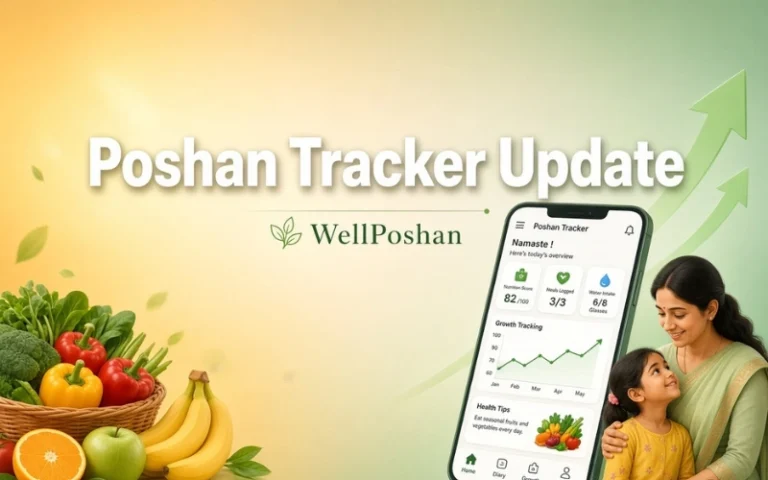
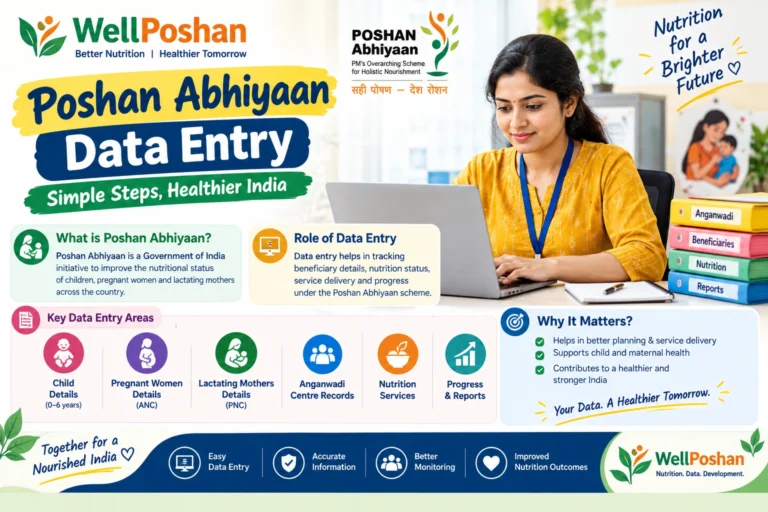
- Digital data entry — Anganwadi workers log attendance, activities, and health data through the Poshan Tracker app, which is what many “Poshan Maah data entry” searches are actually referring to.
- Poster and social media campaigns — official Poshan Maah posters, hashtags, and short videos pushed out by the ministry and state departments to keep the Jan Andolan visible online.
- School and college outreach, including essay and quiz competitions on nutrition themes.
Poshan Maah vs. Poshan Pakhwada: What’s the Difference?
People often mix these two up, so here’s a clean side-by-side:
| Feature | Rashtriya Poshan Maah | Poshan Pakhwada |
|---|---|---|
| Duration | About a month | About two weeks (a “pakhwada” or fortnight) |
| Month held | September | March |
| Scale | Larger, nationwide flagship push | Shorter, more focused booster campaign |
| Purpose | Sustained awareness + Jan Andolan momentum | Mid-year reinforcement of the same goals |
Why It Matters: The Numbers Behind the Movement
Between NFHS-4 (2015–16) and NFHS-5 (2019–21) — the two big national health surveys bookending the programme’s early years — child stunting nationally dropped from about 38.4% to 35.5%, wasting fell from 21.0% to 19.3%, and underweight prevalence dropped from roughly 35.8% to 32.1%.
Progress, yes — though nowhere near the original 25% stunting target the government had set for 2022, which is a fair criticism that’s been raised in nutrition policy circles.
As of the Ministry’s 2024 Annual Report, over 10 crore individuals were registered under the scheme, with Uttar Pradesh and Bihar leading in participation.
Community “Jan Andolan” activity counts are reported inconsistently across sources — figures ranging from roughly 90 crore to over 130 crore cumulative activities since 2018 show up in different write-ups — so treat any single headline number as approximate until you check it against the official dashboard.
How to Take Part in Poshan Maah 2026
If you’re wondering how to actually celebrate or join in:
- Visit your nearest Anganwadi centre during September for growth-monitoring or nutrition-counselling sessions.
- Follow the Ministry of Women and Child Development’s official social channels for the current year’s Poshan Maah poster designs and hashtags.
- If you’re an Anganwadi worker or supervisor, official Poshan Maah data entry and activity logging happens through the Poshan Tracker portal/app.
- Simple household steps count too — better dietary diversity, supporting breastfeeding mothers, and reducing added sugar and oil are all themes the campaign actively promotes.
A Quick Glossary
POSHAN Abhiyaan — the national nutrition mission launched in 2018 that Poshan Maah belongs to.
Anganwadi — a village or neighbourhood-level childcare and nutrition centre, part of India’s Integrated Child Development Services (ICDS).
Jan Andolan — literally “people’s movement”; the government’s term for turning nutrition into grassroots, citizen-led action rather than a top-down scheme.
IYCF — Infant and Young Child Feeding, a recurring thematic pillar across editions.
NFHS — National Family Health Survey, the data source used to track stunting, wasting, and underweight trends.
Poshan Tracker — the digital app used for real-time monitoring and data entry by Anganwadi workers.
Conclusion
Poshan Maah isn’t a person, a product, or a one-off event — it’s a recurring, government-led September campaign, now in its 9th year, that tries to make nutrition a shared national conversation rather than a bureaucratic checkbox.
The 2026 edition puts Anganwadi centres front and centre under the theme “Hamari Anganwadi, Hamari Jimmedari,” while continuing the programme’s longer-running focus on maternal nutrition, child growth monitoring, and community ownership.
Whether you’re a policy researcher, a student, or just someone whose local Anganwadi put up a poster — the short version is: it’s India’s annual reminder that good nutrition is a collective job, not an individual one.
Next Questions to Explore
- How does Poshan Maah connect to the PM POSHAN (mid-day meal) scheme in schools?
- What specific results has Mission Saksham Anganwadi delivered since 2021?
- How do state governments customise Poshan Maah themes locally?
FAQs About Poshan Maah
1. What is Poshan Maah?
Poshan Maah (Rashtriya Poshan Maah) is India’s National Nutrition Month, a government-led awareness campaign run every September to improve nutrition among women, children, and adolescents.
2. Poshan Maah is celebrated in which month?
September, every year, since 2018.
3. Who launched Poshan Maah?
It grew out of POSHAN Abhiyaan, launched by Prime Minister Narendra Modi on March 8, 2018, in Jhunjhunu, Rajasthan.
4. Which ministry launched Rashtriya Poshan Maah?
The Ministry of Women and Child Development (MWCD), Government of India.
5. What is the theme of Poshan Maah 2026?
“Hamari Anganwadi, Hamari Jimmedari” (Our Anganwadi, Our Responsibility), with a focus on Anganwadi centres and protein-rich nutrition for pregnant and lactating women.
6. Why is Poshan Maah celebrated in September specifically?
September was designated as India’s National Nutrition Month when POSHAN Abhiyaan was structured in 2018, pairing it with a shorter March fortnight (Poshan Pakhwada) so the campaign gets two annual pushes rather than one.
7. Which edition is the 2026 Poshan Maah?
The 9th edition.
Disclaimer
This article is for general informational purposes only. It is not official government communication, medical advice, or a substitute for guidance from a qualified nutritionist or your local Anganwadi centre. Campaign dates, themes, and statistics are subject to change or regional variation — always confirm current details with the Ministry of Women and Child Development before relying on them.
Thank You For Reading!
Also read our previous blog for more such information –