Liquorice – Love It or Hate It, the Complete Guide
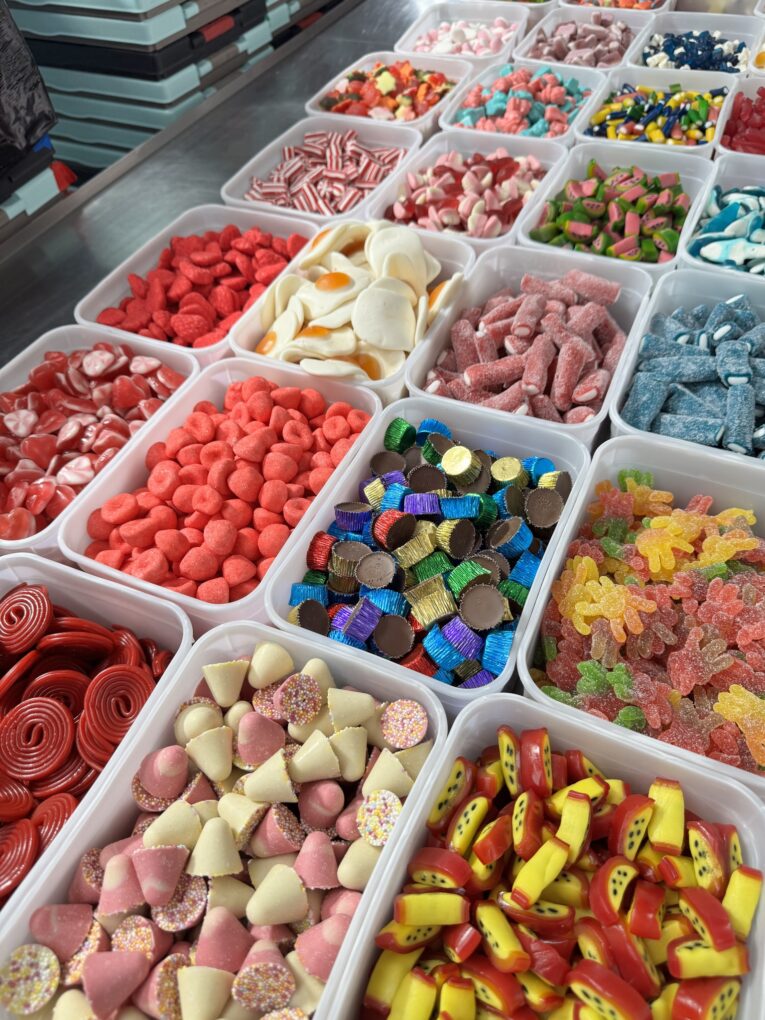
Put a bag of liquorice on a table at a family gathering and watch what happens. One person lunges for it. Another recoils as if you’ve offered them a bowl of mud. There’s rarely a middle ground, and that’s exactly what makes it the most divisive sweet in Britain.
I’m firmly in the “love it” camp, but I’ve spent enough time around haters to understand them. So here’s the full story: what liquorice actually is, where British favourites come from, and how you might talk a doubter into giving it another go.
What is liquorice, exactly?
Real liquorice comes from the root of a plant called Glycyrrhiza glabra, a leguminous shrub that grows in parts of southern Europe and western Asia. The roots are dug up, and the sweet, earthy extract is boiled down into a thick, dark paste. That paste is what gives liquorice its unmistakable taste: sweet, a bit bitter, slightly medicinal, with a deep savoury note underneath.
The sweetness comes mainly from a compound called glycyrrhizin, which is famously far sweeter than ordinary sugar. It’s also why the flavour lingers so long on your tongue.
Most liquorice sweets also contain sugar, flour, gelatine or other binders, and often aniseed oil, which adds that sharp, almost minty-sweet edge. Some are soft and chewy, others are firm and dense, and a few are hard enough to stop a clock.
A quick word on moderation
Because of that glycyrrhizin, health bodies generally advise not eating liquorice in huge quantities, particularly over a long period. That’s a general caution rather than a scare story, and a handful of Allsorts on a film night is nothing to worry about. If you’ve got specific health concerns, or you’re pregnant, it’s worth checking the official guidance or asking your GP or pharmacist. For most of us the sensible advice applies to liquorice like it does to most sweets: enjoy it, vary it, don’t live on it.
Pontefract cakes and Yorkshire’s liquorice story
If liquorice has a spiritual home in Britain, it’s Pontefract in West Yorkshire. The town has a long association with liquorice growing, and its name is stamped into the little round black discs known as Pontefract cakes (sometimes called Pomfret cakes). They’re small, shiny, and usually embossed with a castle design, a nod to the town’s history.
Pontefract cakes are firm, dense and strongly flavoured, closer to the real thing than a lot of more sugary liquorice sweets. They don’t dissolve quickly; you chew and suck on one for a good while. Plenty of older folk will remember them from sweetshop jars and bus journeys.
Bassett’s Allsorts and the tray spill legend
Then there’s the star of the show: Liquorice Allsorts. Legend has it that in 1899 a Sheffield sales rep for the Bassett’s company, Charlie Thompson, was showing a customer a selection of the firm’s sweets when he accidentally dropped his sample tray. The sweets tumbled together in a jumble, and the customer loved the look of the mixture. A new product was born.
Whether or not that’s exactly how it happened, it’s a lovely story and it explains the appeal. An Allsorts bag is a lucky dip of textures and colours: coconut wheels, sandwich layers of liquorice and fondant, little cylinders with a hundreds-and-thousands coating, and a few chewy fruit pieces for good measure. Bassett’s even gave the mix a cheerful mascot, Bertie, who is built entirely out of the sweets.
Sweet shops such as MixSweets stock Allsorts alongside the more traditional black stuff, so it’s easy to try the mild and the mighty side by side and work out which camp you belong in.
The Dutch salty drop
Cross the North Sea and you’ll find a very different style. The Dutch adore zoute drop, or salty liquorice, which is flavoured with ammonium chloride (salmiak) as well as, or instead of, sugar. It’s sharp, savoury and a bit like licking a seaside pebble. Visitors often make a face the first time they try it. Locals reach for another.
If you’ve ever heard people describe liquorice as “disgusting” or “like medicine”, this is often what they’ve been given. Sweeter British liquorice is a different beast entirely, so don’t judge the whole category by one salty drop.
Red liquorice isn’t liquorice
Here’s a bit of trivia that always surprises people. Those chewy red or strawberry laces sold as “red liquorice” often contain no liquorice at all. The name is about the shape and chew, not the flavour. They’re usually fruit-flavoured, and they have more in common with a jelly or a wine gum than with a Pontefract cake.
True liquorice is generally black or very dark brown, and the flavour is unmistakable. If your “liquorice” tastes of strawberry, it’s not the real thing.
Liquorice beyond the sweet jar
It isn’t only sweets. Liquorice root has been used for centuries as a flavouring, and you’ll find it in herbal teas, in some ice creams, and in the dark, savoury “liquorice sticks” you can chew on. In Scandinavia it turns up in chocolate, in sweets and even in drinks, often in the salty style. Closer to home, it’s the secret behind plenty of old-fashioned cough sweets and lozenges, which is partly why that “medicinal” association sticks.
It’s also a good example of how taste is cultural. The Dutch, Germans and Scandinavians eat liquorice by the bagful, while many British children grew up treating the black Allsorts as the ones to avoid. Neither side is wrong. They just had different first impressions.
The shapes worth knowing
Liquorice comes in some wonderfully old-fashioned forms:
- Torpedoes. Chewy black liquorice shells with a soft or fizzy centre. A pocket-money classic.
- Catherine wheels. Flat spirals of liquorice, often with a coloured sweet at the centre. They unroll as you eat them, which is half the fun.
- Cream rock. A smooth, sweet, firm sweet with a distinctive creamy flavour. It’s a nostalgic seaside treat and fits nicely beside the stronger flavours.
- Liquorice laces, bootlaces and twists. Chewy and long-lasting, ideal for a long walk.
If you’d like to explore the whole range in one go, there’s a good selection of liquorice sweets online that covers the soft, the chewy, the coated and the traditional.
Why do people hate it?
There are a few reasons, and none of them are daft.
- The flavour is strong. Aniseed and liquorice root don’t whisper. They announce themselves.
- The texture can be tough. Some liquorice is dense, sticky or rubbery, which doesn’t appeal to everyone.
- First impressions matter. If your first taste was something salty and medicinal, it’s easy to write the whole category off.
- Memory and association. Plenty of people have a childhood memory of a particular flavour being pushed on them, and it stuck.
It’s also worth noting that taste is a funny thing. Bitter and savoury flavours are often acquired, much like black coffee, olives or strong cheese.
How to convert a hater
Whatever you do, don’t start with the strongest stuff. A gentle approach works better, so try these steps.
First, begin with something sweet and soft. A sugar-coated Allsort or a chewy fruit-flavoured liquorice is far friendlier than a salty drop.
Second, try pairing. Liquorice goes surprisingly well with other flavours. Aniseed with sherbet, for example, is a classic old-fashioned combination: the fizz lifts the earthiness and the sweetness softens it. A few sherbet dips alongside a Catherine wheel can be the gateway many people need.
Third, go for the coconut. The coconut layers in Allsorts are the sweet-toothed cheat code. They give a mild, creamy hit that balances the liquorice.
Fourth, keep it low pressure. Offer a single piece, not a bag. Nobody likes being cornered with a sweet.
Fifth, let them pick. A mixed bag lets them choose their comfort level, with a few gentle liquorice pieces tucked in among the fizzy and fruity favourites, so the sceptic can ease in without feeling stuck with a whole bag of black.
A gentle tasting ladder
If you want to try it properly, work your way up in strength rather than diving in at the deep end.
- Coconut-topped Allsorts and fruit-flavoured chewy liquorice.
- Soft liquorice torpedoes and Catherine wheels.
- Firm liquorice twists and laces.
- Pontefract cakes and traditional dense black pieces.
- Salty Dutch drops, but only if you’re feeling brave.
Take a sip of water between each step, and keep a note of where you stop. That’s your personal limit, and it’s perfectly fine if it’s step one.
Flavour pairings that work
Once you’re comfortable, there’s plenty to play with:
- Liquorice and sherbet for sweet, fizzy contrast.
- Liquorice and coconut for creaminess.
- Liquorice and dark chocolate for a grown-up bitter-sweet treat.
- Liquorice and a strong cup of tea, which is a perfectly British combination.
Storing liquorice
Liquorice keeps well but dislikes extremes. Store it in an airtight tin or jar somewhere cool and dry. Left out in the air, it can harden into something that could double as a doorstop. If it’s gone a bit firm, a few hours with a slice of apple in the container is an old trick, though it’s best not to leave fruit in there for long. Follow the best-before date on the pack.
One last chew
Liquorice will always split a room, and honestly, that’s part of its charm. It’s a sweet with history, character and a few good stories, from a Yorkshire market town to a clumsy sales rep and his dropped tray. If you’ve always said no, try a soft, sweet piece one more time. And if you’ve always said yes, keep the Allsorts away from the person who only likes the coconut ones. They know who they are.