Understanding Your Contact Lens Prescription and Toric Lenses
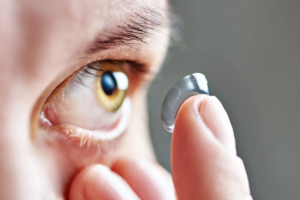
Navigating the world of vision care can sometimes feel like learning a new language. When you receive a vision test result, you are often handed a piece of paper filled with numbers, plus and minus signs, and abbreviations like OD, OS, SPH, CYL, and AXIS. Understanding your contact lenses prescription is an essential step in taking control of your eye health and ensuring you enjoy crisp, comfortable vision every day.
Many people assume that a spectacle prescription can be used directly to buy contact lenses, but this is a common misconception. A prescription for eyeglasses measures the correction needed when lenses sit approximately twelve millimeters away from your eyes on a frame. In contrast, a prescription for contacts takes into account that the lens sits directly on the surface of your cornea. Because of this physical difference, the parameters required for contacts include specific measurements such as Base Curve (BC) and Diameter (DIA) to ensure the lens fits the unique shape of your eye securely and comfortably.
When you look closely at your vision details, you will see key parameters listed for each eye. OD stands for Oculus Dexter, referring to your right eye, while OS stands for Oculus Sinister, referring to your left eye. The Sphere (SPH) value indicates the lens power needed to correct nearsightedness or farsightedness, measured in units called diopters. A minus sign indicates nearsightedness, meaning you struggle to see objects at a distance, while a plus sign indicates farsightedness, meaning close-up tasks require more effort.
For individuals diagnosed with astigmatism, the prescription contains additional numbers in the Cylinder (CYL) and Axis columns. Astigmatism occurs when the cornea or natural lens of the eye has an irregular shape, similar to a football rather than a perfect sphere. This irregular curvature causes light rays to focus on multiple points in the back of the eye, leading to blurred or distorted vision at all distances. To correct this unique condition, eye care professionals prescribe specially designed toric contact lenses.
Unlike standard spherical lenses, which have uniform curvature throughout, toric options feature different powers in different meridians to correct both astigmatism and refractive errors like nearsightedness or farsightedness. Furthermore, because these lenses must stay in a precise orientation on the eye to maintain clear vision, they are engineered with specialized stabilization technology. Brands like ACUVUE incorporate advanced designs such as Eyelid Stabilized Design, which utilizes the natural movement of your eyelids during blinking to keep the lens properly aligned, even when you tilt your head or move your eyes rapidly.
Proper fitting by a qualified optometrist or ophthalmologist is crucial when selecting corrective lenses. During an eye exam, your specialist will evaluate your corneal curvature, assess tear film quality, and discuss your lifestyle requirements. Whether you spend long hours working in front of digital screens, participate in dynamic physical activities, or live in dry environments, selecting the right lens material and replacement schedule makes a significant impact on long-term visual comfort.
Daily disposable lenses offer a high level of hygiene and convenience, allowing wearers to start every morning with a fresh pair and discard them at night. Reusable options, such as bi-weekly or monthly lenses, require routine cleaning and proper storage with appropriate disinfectant solutions. Whichever schedule you choose, staying compliant with your doctor’s instructions and keeping up with regular eye checkups ensures that your vision parameters stay up to date and your eyes remain healthy for years to come.