Repair Hair Transplant: How Corrective Surgery Can Improve the Results of a Previous Procedure
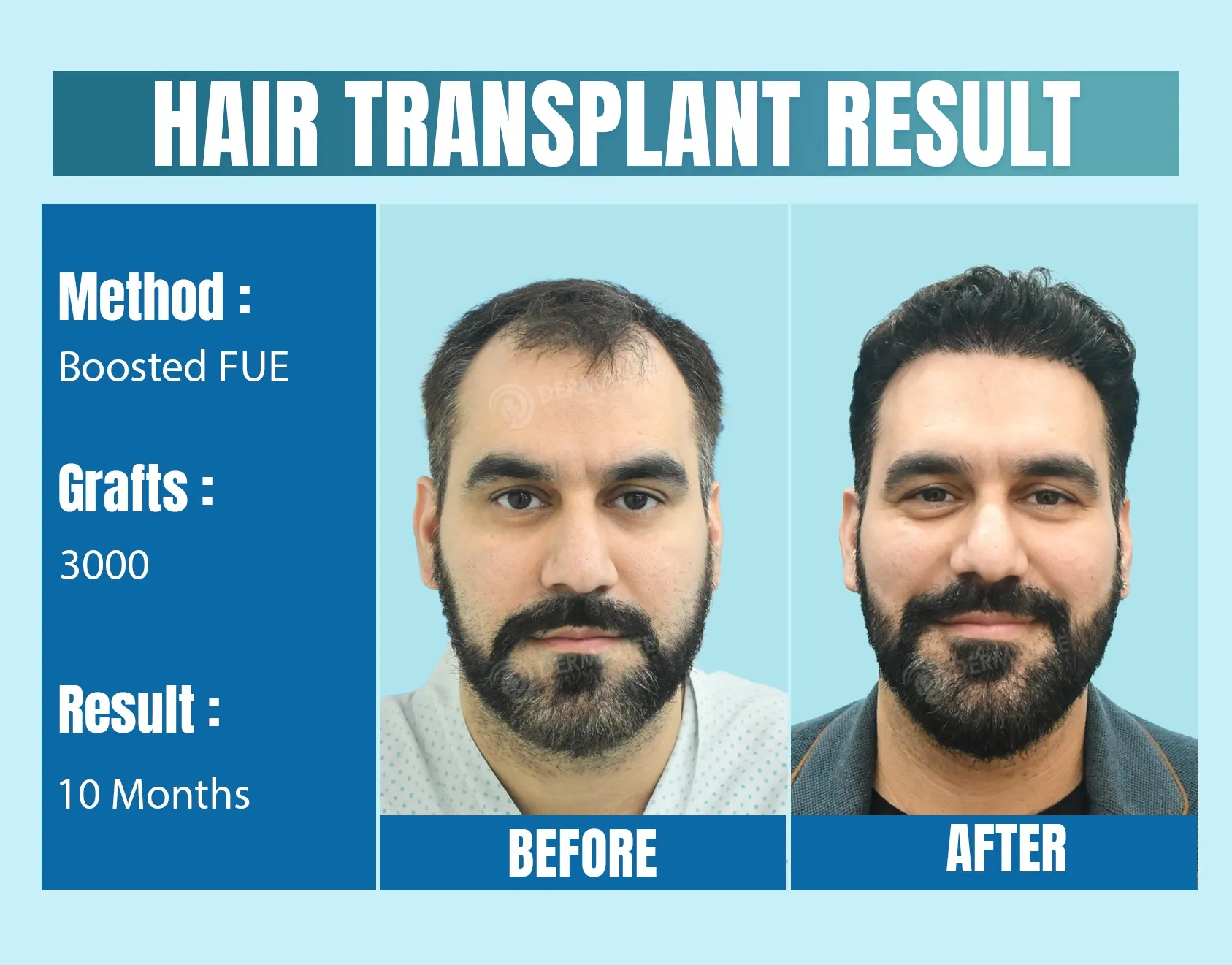
Hair transplantation is intended to restore hair while maintaining a natural appearance. However, not every procedure produces the expected result. Some patients experience an unnatural hairline, uneven density, visible scarring, poor graft growth, or an imbalance between the donor and recipient areas.
For individuals dissatisfied with an earlier procedure, a repair hair transplant may offer an opportunity to improve the appearance of the scalp. Also known as corrective hair transplant surgery, this treatment requires careful assessment and a more individualised surgical approach than many first-time procedures.
What Is a Repair Hair Transplant?
A repair hair transplant is a corrective procedure performed to address problems following an earlier hair restoration surgery. The objective is to improve the appearance of the existing transplant rather than simply add more grafts.
The correction required depends on the original problem. In some cases, the hairline may need refinement. In others, the surgeon may need to improve density, redistribute grafts, or address visible scars.
Common reasons patients consider corrective surgery include:
-
An unnaturally straight or low hairline.
-
Multiple hair grafts placed in the frontal hairline.
-
Uneven or insufficient density.
-
Poor hair growth after the previous procedure.
-
Visible scarring in the donor or recipient area.
-
An overharvested donor region.
-
An unnatural direction or angle of transplanted hair.
Not every concern requires another surgery. A proper examination is necessary to determine whether correction is possible and what results can realistically be expected.
Why Does Corrective Hair Transplant Surgery Require Specialised Planning?
A repair procedure can be more challenging than a first-time transplant because the surgeon has to work around existing grafts, scar tissue, and the remaining donor supply.
1. Assessment of the previous transplant
The first step is to understand what was done during the earlier surgery. The surgeon evaluates the hairline, graft distribution, donor area, scalp condition, and the patient’s current pattern of hair loss.
Previous surgical records and photographs can be useful if available.
2. Donor area evaluation
The donor area is particularly important in corrective cases. Some patients may have undergone excessive extraction during their first procedure. In such situations, the remaining donor supply must be assessed carefully before planning another surgery.
A second transplant should not compromise the donor area’s appearance or future treatment options.
3. Hairline correction
An unnatural hairline is one of the common reasons patients seek a repair hair transplant. A natural-looking hairline requires appropriate placement, irregularity, direction, and graft selection.
Correction may involve softening the frontal hairline or addressing poorly placed grafts. The exact approach depends on the existing result and available donor hair.
4. Managing expectations
Corrective surgery cannot always restore the scalp to its original condition. Scar tissue, limited donor availability, and previous surgical damage may restrict the extent of improvement. Patients should understand these limitations before proceeding.
Choosing the Right Hair Transplant Doctor for Repair Surgery
Selecting the right hair transplant doctor in Delhi is especially important when considering corrective treatment. Patients should look for a surgeon with relevant dermatological and surgical training, experience in evaluating failed or unsatisfactory procedures, and a clear explanation of the proposed correction.
It is also useful to review before-and-after photographs of corrective cases, rather than relying only on first-time transplant results.
A responsible surgeon should explain what can be improved, what may remain unchanged, and whether further surgery is medically appropriate.
FUE-Based Repair Procedures
FUE, or Follicular Unit Extraction, is a technique in which individual follicular units are extracted from the donor area. In selected corrective cases, FUE may be used to improve density or refine specific areas.
The choice of technique depends on the patient’s previous surgery, donor capacity, scar tissue, and the nature of the correction required.
At Dermalife Skin & Hair Clinic, New Delhi, Dr. Gaurav Garg offers FUE-based hair restoration and the clinic’s Boosted FUE approach. The treatment plan is developed after evaluating the patient’s existing transplant and donor area.
Repair Hair Transplant at Dermalife, South Delhi
Dr. Gaurav Garg is a dermatologist and hair transplant surgeon and the Director of Dermalife Skin & Hair Clinic. He completed his MD in Dermatology and Venereology at Seth G. S. Medical College and KEM Hospital, Mumbai.
His additional training includes hair transplant surgery in Israel, dermato-surgery at PGI Chandigarh, and advanced dermatology, dermato-surgery, and laser training at the National Skin Centre, Singapore.
For patients considering a hair transplant repair, the clinic’s assessment focuses on identifying the reason for dissatisfaction, understanding the limitations created by previous surgery, and deciding whether corrective treatment is suitable.
How Long Should Patients Wait Before Considering a Repair?
The timing depends on the original procedure and the concern being addressed. Hair growth after transplantation takes time, and the final result is generally assessed over several months. Many patients need to wait around 9 to 12 months before judging the outcome of a first procedure, although individual cases may differ.
However, complications or specific concerns should be assessed earlier by a qualified doctor rather than waiting without medical advice.
Final Thoughts
A repair hair transplant requires careful planning, realistic expectations, and an understanding of the limitations created by previous surgery. The objective is to improve the existing result while protecting the remaining donor hair.
Patients who are unhappy with an earlier transplant should seek an independent clinical assessment before deciding on another procedure. A detailed consultation with an experienced hair transplant surgeon can help identify the available options and determine whether corrective surgery is appropriate. If you don’t want to trim your head, then you can go with an unshaven fue hair transplant.